This past summer, I had the chance to take part in the Summer Undergraduate Research Experience (SURE) at Lewis University, and honestly, it was one of the coolest things I have ever done as a student. I had done plenty of projects before, like analyzing Pokémon stats, cleaning up UFO sighting reports, or even building a job market dashboard with my club, but this was the first time I was doing real, structured research with professors and other students. It felt different from class assignments because this time there was not a “right answer” waiting at the back of the book. We were trying to figure out something new.
Our project was all about predicting economic recessions with machine learning. Sounds fancy, right? But what it really meant was a ton of work behind the scenes. First, we collected data from places like the Federal Reserve, World Bank, and OECD. Each dataset came in its own format, some monthly, some quarterly, some with different naming conventions, so it was like trying to fit puzzle pieces from six different boxes together. After that, we cleaned it up, handled missing values, and transformed it by creating features like lagged variables and moving averages. Only then could we actually start building models.
We tried out Random Forest, XGBoost, and LSTMs. Random Forest gave us this broad, balanced perspective, XGBoost focused on a few powerful predictors like consumer confidence and yield spreads, and LSTMs added a time-series angle that looked at patterns over months. I loved seeing how the same data could tell slightly different stories depending on the model we used.
The daily routine was very research-focused, if that makes sense. Most mornings, I would sit down with the dataset, tweak my cleaning steps, or run new experiments. Afternoons usually included meetings with my mentors where I would share what I found and get ideas for next steps. Some days were all about debugging code, which every data scientist knows too well, and other days were spent putting results into slides or writing updates. It was structured but flexible, and I found myself getting into a rhythm that felt both challenging and rewarding.
One of the biggest surprises for me was how important reading papers turned out to be. At first, I thought I could just Google questions like “best way to handle missing economic data” or “lagged features in machine learning” and get quick answers. What I really needed was to dive into academic papers. At first, they were intimidating, with lots of jargon and math, but over time, I started to see the value. These papers were not just walls of text; they were other researchers basically saying, “Here is how we tackled this problem, here is what worked, here is what did not.” It completely shifted my mindset. Instead of just searching for coding tricks, I was looking for methodology and reasoning.
And then came the presentation. After weeks of data wrangling and model building, I had to put everything into a 12-minute talk that a room full of people could actually understand. That was tough. It is one thing to chat with my mentors about lagged indicators or SHAP values, but explaining it to a mixed audience meant cutting down the jargon and focusing on the big picture. I practiced a lot, trimming my slides until they told a story instead of overwhelming people with graphs. When the day came, I was nervous, but once I got going, it felt natural. I realized that my years of teaching English had prepared me for this moment because I already knew how to break down complex ideas in a way that makes sense.
Looking back, SURE taught me way more than I expected. Yes, I learned about economic data, machine learning, and feature engineering. But I also learned how to structure my days around research, how to read academic papers for answers, how to present to different audiences, and most importantly, that I really love doing this kind of work. Research does not feel like chasing a grade. It feels like being part of a bigger conversation, where every little discovery adds something new. That realization is what made me start looking seriously at PhD programs.
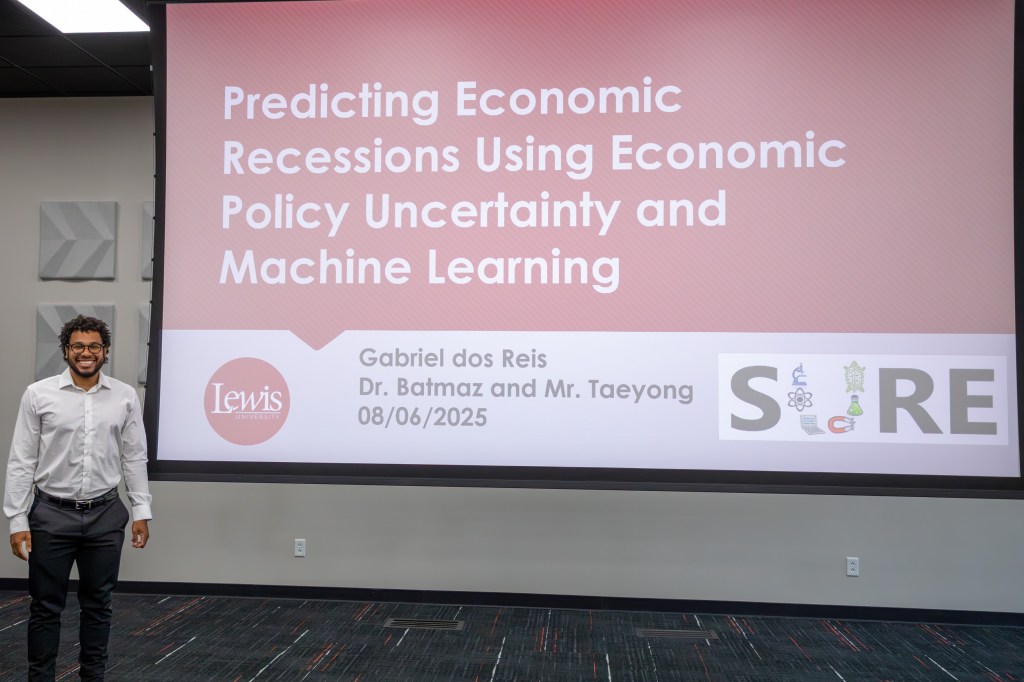
In the end, SURE gave me more than technical skills. It gave me confidence that I am on the right path. It showed me that I actually enjoy the long hours, the problem-solving, the reading, and even the presenting. That is not something I would have said a year ago, but now I can totally see myself doing this for a long time.
 Learning with Data
Leave a comment