Introduction
What would you do if you had just over a month to plan a hackathon from scratch? That was the challenge our CS club faced. With no prior playbook, just determination and teamwork, we pulled off an event that brought students together, sparked creativity and taught us invaluable lessons. Here’s how we did it.
Starting from Scratch
Unlike past leadership, we had limited resources to reference our hackathon. Aside from myself, as someone who participated in the first hackathon, our leadership team was flying solo. Every element of running a hackathon, from reserving rooms to marketing and gathering funds—had to be built from the ground up. But we did not let that scare us.
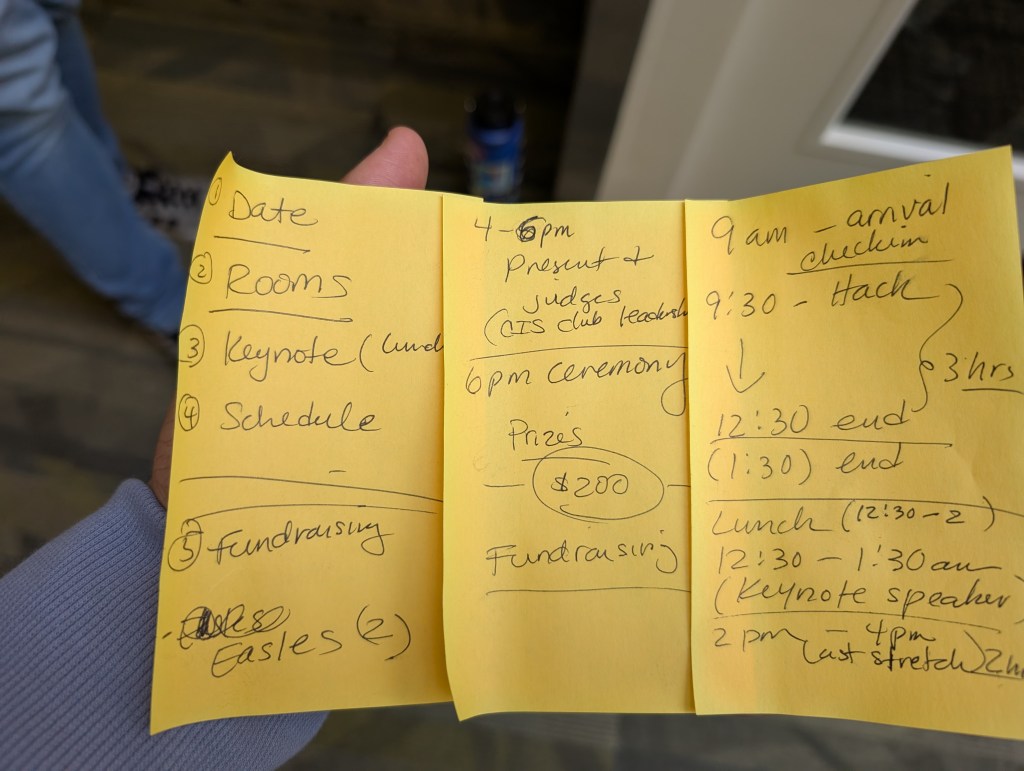
The 39-Day Sprint
With the clock ticking, we had to move fast. Our approach boiled down to four key priorities:
- Securing the classrooms and Logistics
The first step was finding suitable rooms for the teams and lunch room, and making sure we had all the necessary supplies. Booking rooms, setting up tables, and ensuring that we had food for all participants and prizes were one of our top priorities to provide a smooth experience for participants. - Spreading the Word
To attract participants, we launched an outreach campaign. We visited classrooms for two weeks, expressing how important hackathon can be for the students, and how even beginners, those taking intro classes, can not only learn a lot, but also contribute to the team. We also connected with professors to extend our reach. - Managing a Strict Budget
Since we didn’t have enough time to raise funds, we had to work within a strict budget. We had to plan our finances very carefully to ensure we used all our finances efficiently, covering essentials like food, supplies, and prizes. Now that the hackathon is over, we’re actively planning events and sales to increase our budget for next year. - Bringing in Experts
A great hackathon isn’t just about coding—it’s about learning. We reached out to industry professionals and alumni to serve as keynote speakers and judges, adding a professional touch to the event despite the time constraints.

The Hackathon Experience
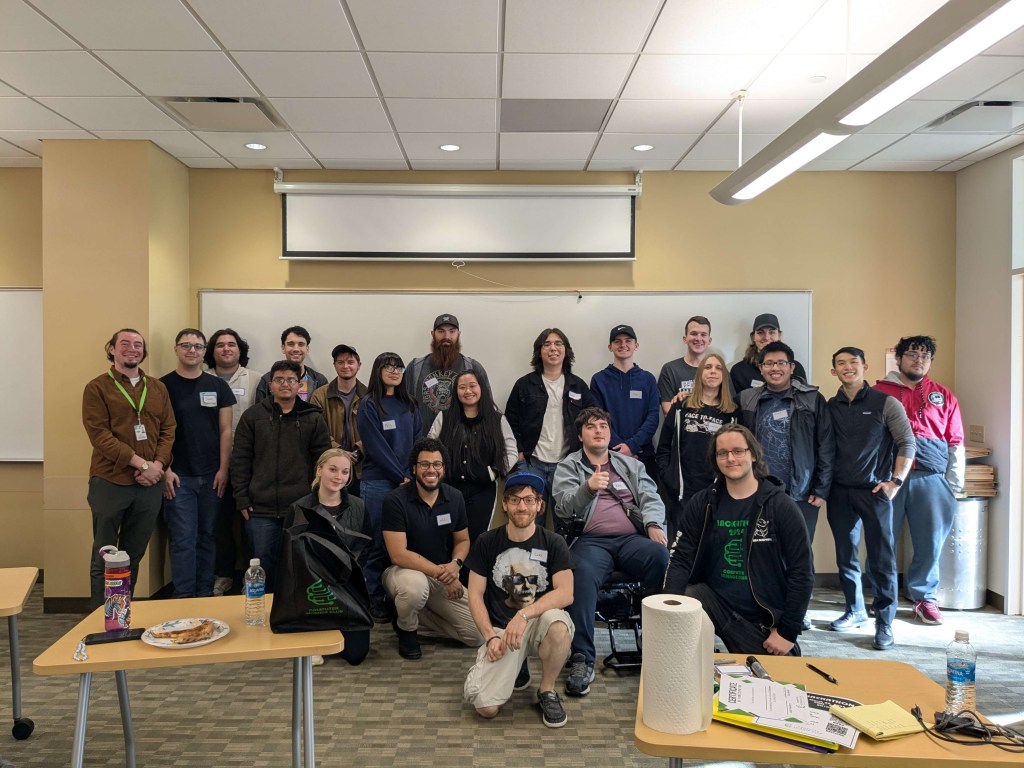
Despite having 14 participants—a little short of last year’s turnout—the hackathon was a success. Teams created innovative projects across diverse domains, ranging from beginner-friendly applications to advanced solutions within the theme of creating tools to help students be more productive. The mix of skill levels enriched the event, creating an environment of collaboration and mentorship between the participants.
One standout moment was our keynote speaker, an alumna from the College of DuPage (COD) who is now a senior at Lewis University. Despite her busy schedule, she generously shared her wealth of experience gained through internships and her current job. Her talk resonated with the participants as she covered essential topics like approaching technical projects, navigating LeetCode challenges, preparing resumes, excelling in interviews, and building a professional network. Her relatable journey and actionable advice offered inspiration and practical tools for everyone attending, especially those just starting their careers in tech.
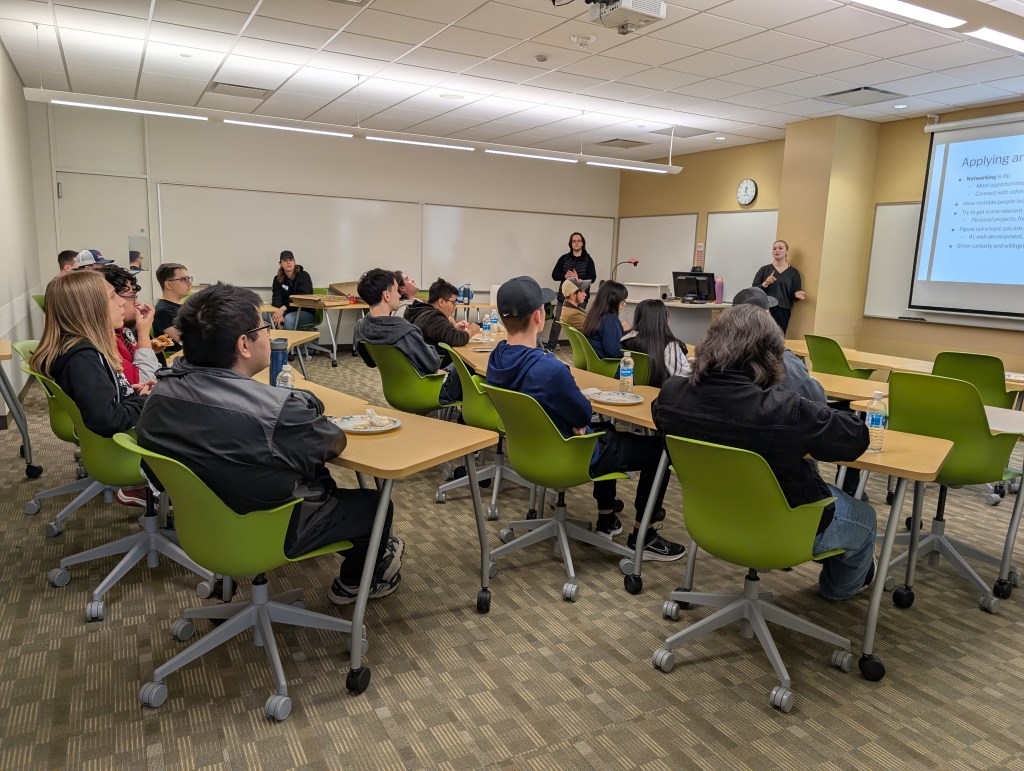
To ensure we learned and improved, we used Google Forms to gather participant feedback before and after the event. The insights provided helped us identify what worked well and what could be improved, one of our major concerns was that students would be apprehensive on participating for lacking skills or being beginners. As you can see on the chart below, we had an overall positive feeling about their ability to contribute to their team.

As you can see in the chart below, the students had an overall positive feeling about their ability to contribute to their teams with their technical skills, which was a good sign of an excellent hackathon and that our marketing campaign worked, as we always wanted this event to be accessible to all students.

One major takeaway was the need for a non-code path, where students could compete against one another focus on designing a product, creating diagrams, workflows, and UI/UX.
Watching four different teams tackle the prompt and push the boundaries of their knowledge was truly inspiring. Some developed multithreaded applications for task management, while others created a calendar system to help students organize assignments, quizzes, and tests. One team even built a text-to-speech application. The creativity and technical skills on display were impressive, especially considering that these projects came together in just 5 hours and 30 minutes.
Reflections and Next Steps
Running a hackathon with such tight constraints taught us valuable lessons:
- Planning ahead and documenting processes can make future events smoother.
- A team with passion and commitment can overcome logistical difficulties.
- Participant feedback is invaluable for continuous improvement.
Next year, we’re aiming for an even bigger and better event—perhaps with more participants, stronger industry partnerships, and refined logistics. If you’re thinking of organizing a hackathon, start early, embrace the chaos, and most importantly, build a team that believes in the mission.
 Learning with Data
Leave a comment